
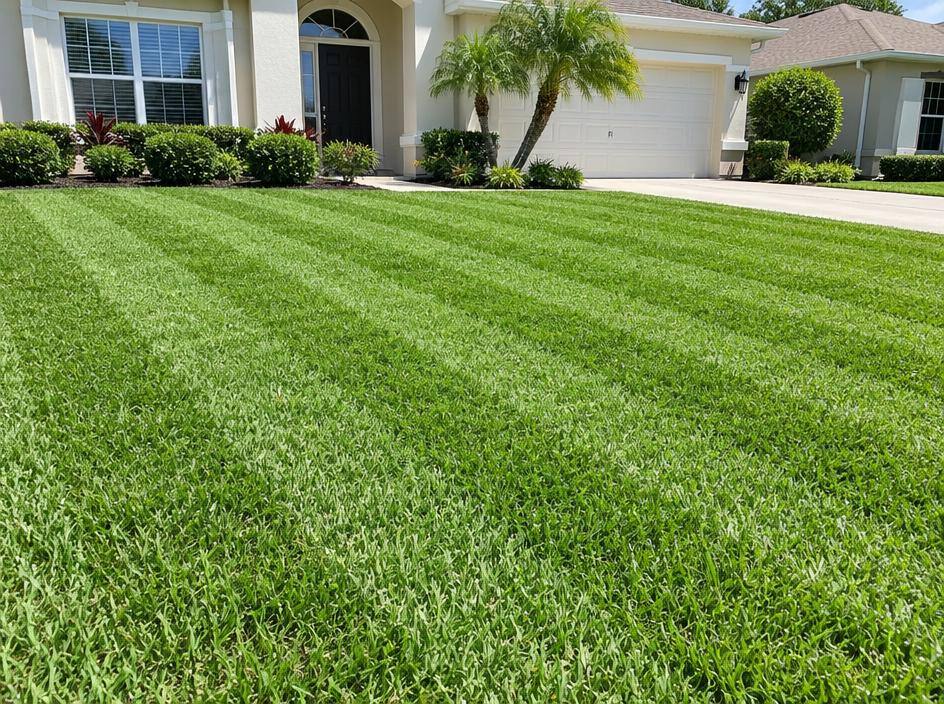
Why regular mowing matters in Florida
Most lawns around Bradenton are warm-season grasses such as St. Augustine, Bahia or Zoysia. They grow hardest during the hot, rainy months, roughly late spring through early fall. When mowing falls behind during that stretch, you end up cutting off too much of the blade at once, which can stress the grass and leave it looking brown or scalped.
Mowing at a consistent height also helps the turf grow in thicker. A denser lawn shades the soil, which makes it harder for weeds to get established and helps the ground hold moisture between rains.
What a well-mowed lawn does for your property
A freshly cut lawn is usually the first thing neighbors and visitors notice. Even, uniform grass makes landscape beds, walkways and the front of the house look sharper, and it is often what keeps a home in line with HOA expectations in planned communities.
It is also practical. Shorter, well-kept grass is easier to walk on, makes it simpler to spot irrigation problems or bare patches early, and keeps the yard usable for kids, pets and get-togethers.
How Often Should You Mow Your Lawn in Florida?
There is no single schedule that fits every yard. A common rule of thumb is to never remove more than about one third of the grass blade in a single cut. During the peak growing season, that often means mowing about once a week. In the cooler, drier months, many lawns slow down enough that every other week, or even less, is plenty.
The right frequency for your yard depends on a few things:
- Grass type. St. Augustine and Bahia grow at different rates and are typically kept at different heights.
- Rainfall and irrigation. A wet stretch or a generous sprinkler schedule speeds up growth.
- Sun and shade. Shady areas grow more slowly and usually benefit from a slightly taller cut.
- Fertilizer. Recently fed lawns tend to grow faster for a while.
- Your preferences or HOA rules, which may call for a particular look.
Seasonal things to keep in mind
In summer, the combination of heat and daily rain means grass can outpace a casual mowing routine. Cutting when the lawn is very wet can leave ruts and clumps, so timing around storms helps. In winter, growth slows and some lawns go partly dormant; mowing too short during this period can leave grass thin heading into spring.
Keeping mower blades sharp matters year-round. A dull blade tears the grass instead of slicing it, which leaves ragged, browned tips.
How to ask about mowing for your home
Give us a call or send a message with your address, a rough idea of your yard size, and how often you are hoping to have it mowed. We will talk through what makes sense for your lawn and provide a quote. If you also want edges and beds cleaned up, ask about our trimming services at the same time.
Where we work
We offer lawn mowing to homeowners across Manatee County, including:
Recent mowing projects
Photos of real On Time mowing work will be shared here soon.
Mowing FAQs
How short should my lawn be cut?
It depends on the grass. St. Augustine is commonly kept taller than Bahia or Zoysia. Cutting too short can weaken the lawn, so the goal is a height that suits your grass type rather than the shortest possible cut.
Do I need to be home when my lawn is mowed?
Usually not, as long as gates are accessible and pets are kept inside. We can confirm the details when we discuss your property.
What happens if it rains on a scheduled mowing day?
Mowing soaked grass can damage the lawn and leave clumps, so heavy rain may shift the timing. We will keep you informed if weather changes the plan.
Can you mow a lawn that has become overgrown?
Reach out and describe the situation. An overgrown lawn may need to be brought down gradually so the grass is not shocked, and we can talk about the best approach.